



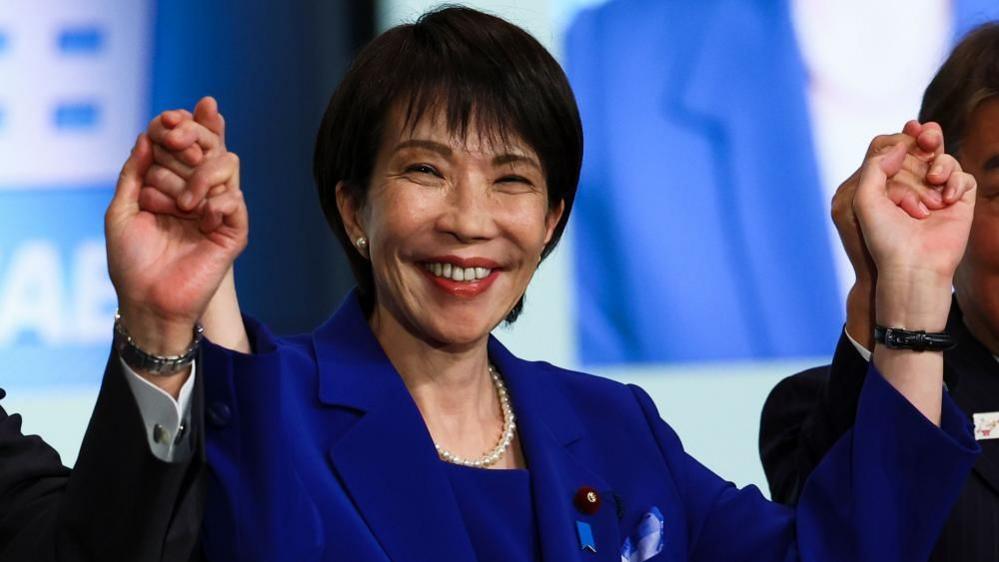
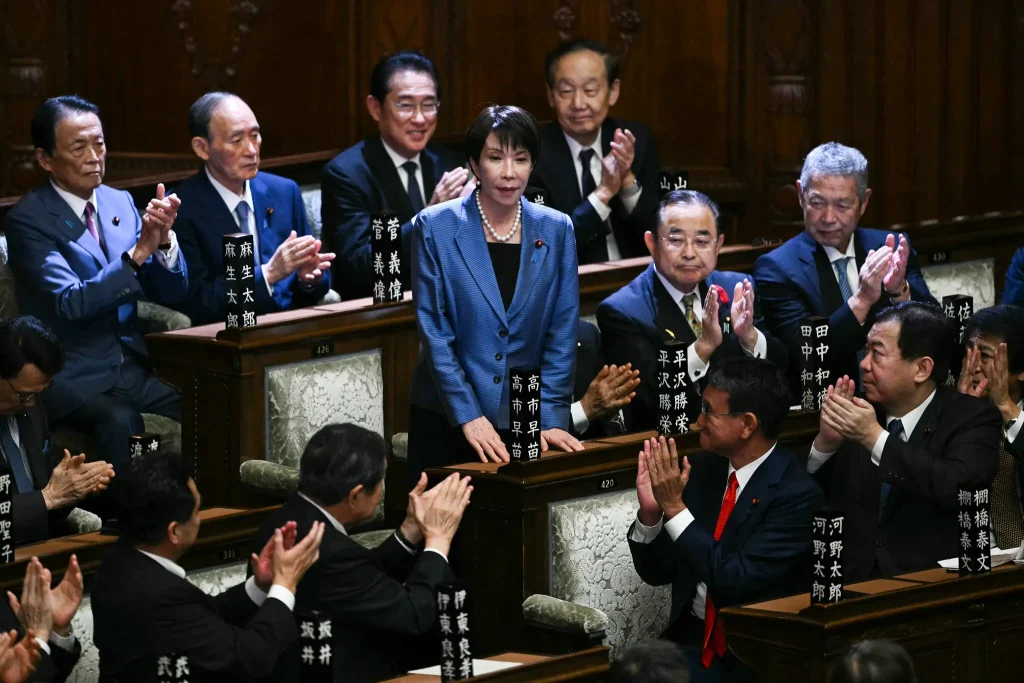
Sanae Takaichi has become the country’s first female prime minister following a vote in the lower house of parliament in a landmark shift for Japanese politics.
Takaichi, 64, leader of the ruling Liberal Democratic Party (LDP), received 237 out of 465 votes in the lower house, securing her position as Japan’s 104th prime minister. Her election follows a coalition deal between the LDP and the right-wing Japan Innovation Party (Ishin no Kai), ensuring parliamentary support despite the government lacking a clear majority in both chambers.
Takaichi’s emergence comes at a turbulent time for Japan, which is grappling with rising inflation, a weak yen, and sluggish growth. Her economic stance is expected to differ from the deflation-era policies of her predecessors, as she focuses on stimulating domestic demand while keeping inflation in check. On security, she maintains a hard-line position similar to that of former Prime Minister Shinzo Abe, advocating constitutional reform, increased defence spending, and a stronger alliance with the United States.
While Takaichi’s appointment is historic, her conservative social views have drawn scrutiny. She has voiced opposition to same-sex marriage and the use of separate surnames for married couples and she supports maintaining male-only succession for Japan’s Imperial family. Critics argue that, despite her gender milestone, her policies may not advance gender equality in meaningful ways.
Markets initially responded positively to her election, with the Nikkei index rising amid expectations of fiscal stimulus. However, analysts caution that Japan’s current economic climate is precarious, with inflationary pressures and a weakening currency posing new challenges. Excessive government spending could further depress the yen and trigger public discontent.
Politically, Takaichi faces a fragile landscape. The LDP’s traditional partner, Komeito, exited the coalition following internal disputes, leaving her to navigate governance through alliances with smaller parties to pass key legislation.
Takaichi is expected to be officially sworn in later today and will present her first policy address within the week. She is scheduled to meet with U.S. President Donald Trump and outline Japan’s defence and economic priorities in the coming days.
Her election marks both a symbolic and strategic turning point for Japan. While her rise breaks a long-standing gender barrier, her leadership will be defined by how effectively she manages economic headwinds, maintains global alliances, and stabilizes a divided political landscape.
